Natural Ingredients in Baby Skincare: A Parent’s Guide to Reading the Label
Turn over any bottle of baby skincare and you’ll meet a list of ingredients — some familiar from the kitchen or the garden, some less so. Knowing what each one is, and why it’s there, turns label-reading from guesswork into an informed choice. Here’s a plain-language guide to the botanicals we use across our own blends, and a few principles for reading any label.
How to read a baby skincare label
- Shorter is easier to judge. A short ingredient list means you can actually know what’s touching your baby’s skin. Long lists aren’t automatically bad — but they’re harder to evaluate.
- Check where the scent comes from. “Fragrance” or “parfum” as its own entry means an added scent. In a botanical blend, scent can come from the plants themselves — our own oils carry no synthetic fragrance; what you smell is the label’s botanicals.
- Patch test regardless. Natural doesn’t mean universally suitable — skin is individual. A drop on the inner elbow and a 24-hour wait is the honest test for any new product, however gentle the label reads.
The soft base oils
Sweet almond
A soft plant oil pressed from almonds, and one of the most classic massage bases in baby care. It’s the “body” of a blend — the skin-friendly base that lets a massage glide and leaves skin feeling soft and moisturized. You’ll find it in our Dreamy Oil and Baby Bath Oil.
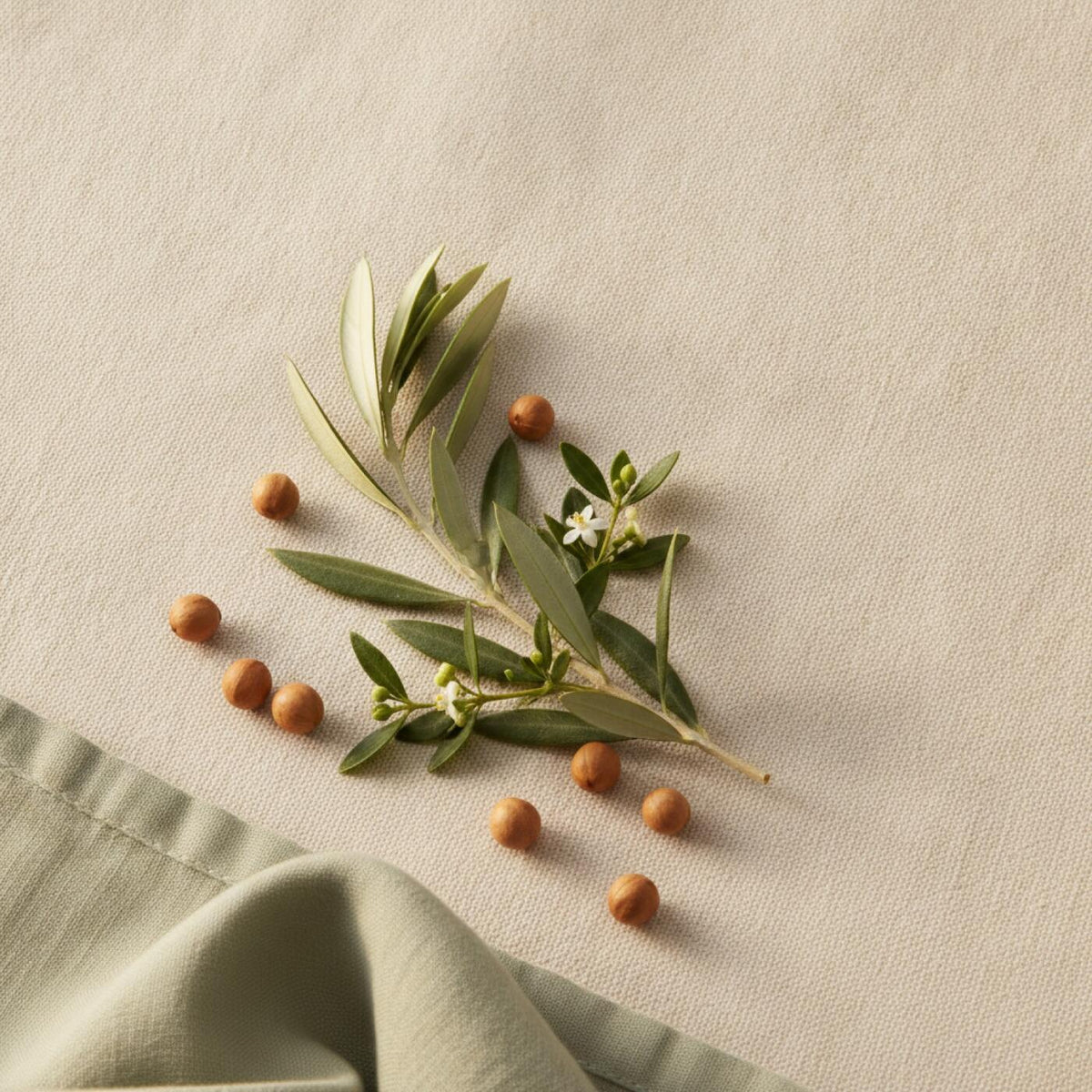
Olive
The familiar kitchen staple has a long history on skin, too — dense, nourishing and well suited to softening stubborn dry patches, which is why it anchors our Baby Scalp Oil.
Jojoba
Technically a liquid plant wax rather than an oil, jojoba is prized for feeling close to the skin’s own oils. It’s the light partner beside richer bases, helping a blend spread easily — in our world, across a small scalp.
The calming florals
Lavender
The scent most adults already associate with winding down, and a flowering herb with centuries of evening tradition behind it. In a bath blend, its familiar note rises with the warmth of the water — part of why the bath itself becomes a sleep cue in a consistent bedtime routine.
Rose
A classic floral botanical — in our bedtime blend it’s the soft heart of the scent, the note that makes an evening massage feel like a ritual rather than a routine.
Chamomile
The gentlest of the classic botanicals — the same flower behind bedtime teas. In skincare blends it plays the calm, familiar note; we use it in Baby Tummy Oil alongside fennel.
The garden herbs and flowers
Calendula
A marigold-family flower with a long tradition in delicate-skin care — a frequent guest in baby balms and blends where skin-friendliness is the whole brief.
Fennel
A garden herb and the classic of traditional tummy-massage blends — the ingredient that makes a tummy formula different from a bedtime one. (The technique matters as much as the blend: see our tummy massage guide.)
Myrtle
An aromatic Mediterranean botanical you won’t often meet in baby care — it’s the distinctive note of our scalp formula specifically.
What “natural” does and doesn’t mean
“Natural” describes where ingredients come from — not a promise about results, and not a substitute for care in how products are used. The honest version of natural baby skincare is modest: short ingredient lists, botanicals chosen for a clear purpose, no added fragrance, patch testing, and directions followed as printed on the label. That’s the standard we hold our own small-batch blends to, and the standard worth holding any brand to.
Frequently asked questions
Are essential oils and botanical oils the same thing?
No. Essential oils are concentrated aromatic extracts; base (carrier) oils like sweet almond, olive and jojoba are the soft bulk of a blend. Gentle baby formulas are built on carrier oils, with botanicals in supporting roles.
If it’s natural, can I skip the patch test?
No — patch testing is about your baby’s individual skin, not about how an ingredient was made. One drop, inner elbow, 24 hours.
Where can I see exactly what’s in each Alma blend?
Every product page lists its label botanicals, and each bottle carries the full printed label — the label is always the authoritative source. Browse the full range in the collection.
Disclaimer
The information provided above is for general educational purposes only. It is not medical advice. For questions about your baby’s skin, always consult a healthcare professional.
This guide is general information for everyday care, not medical advice. If you have concerns about your child's health, please speak with your pediatrician.