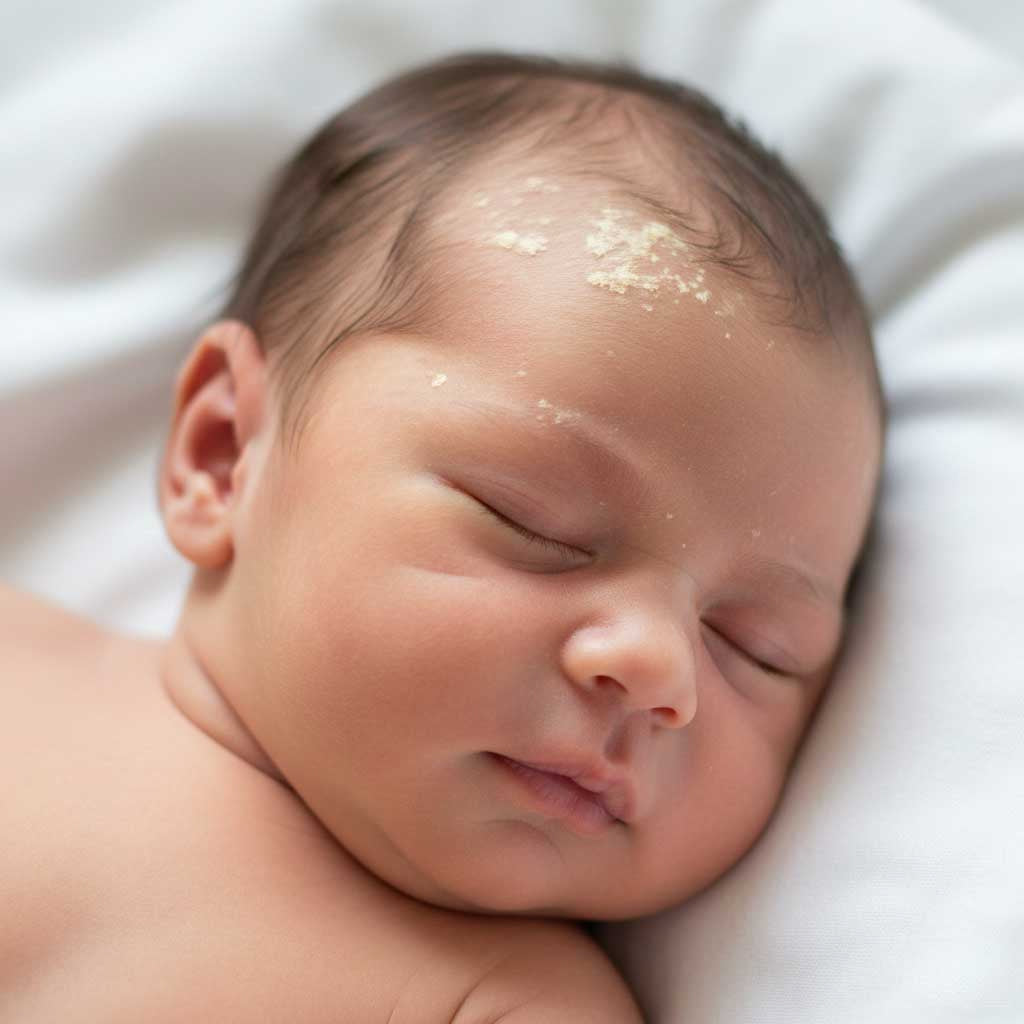
Baby Cradle Cap: Causes, Symptoms & Gentle Care
Cradle cap is a very common condition in newborns, and although it may look concerning at first, it’s completely harmless and not contagious. These flaky patches usually appear on the scalp and can sometimes spread to the eyebrows or behind the ears.
The good news? It almost always clears up naturally within a few months.
What Cause Cradle Cap?
Cradle cap occurs when your baby’s skin produces too much sebum (natural oil). The excess oils disrupt the normal shedding of skin cells, causing them to build up into yellowish, greasy flakes.

How to Recognize Cradle Cap

How to Care for Baby Cradle Cap
In most cases, no treatment is necessary.
Cradle cap typically fades on its own within a few months usually between 6 to 12 months of age as your baby’s hormones balance out.
However, if you’d like to help soften and remove the flakes quicker, you can follow this gentle care routine:
- Apply Natural Scalp Oil (Overnight)
Massage a thin layer of Alma Nature Scalp Oil onto your baby’s scalp before bedtime. The natural oils help soften the flakes overnight without irritating the skin. - Gentle Removal in the Morning
Using a soft baby brush or a wide-tooth comb, carefully loosen the softened flakes.
Do not force or scratch off any stubborn patches, this can cause redness or even bleeding. - Keep It Natural and Simple
Cradle cap is not caused by poor hygiene, and no special shampoos or aggressive treatments are necessary.


Disclaimer
The information provided above is for general educational purposes only.
For any medical concerns or persistent symptoms, always consult a healthcare professional.
Relying solely on the information presented here is at the reader’s discretion.
This guide is general information for everyday care, not medical advice. If you have concerns about your child's health, please speak with your pediatrician.